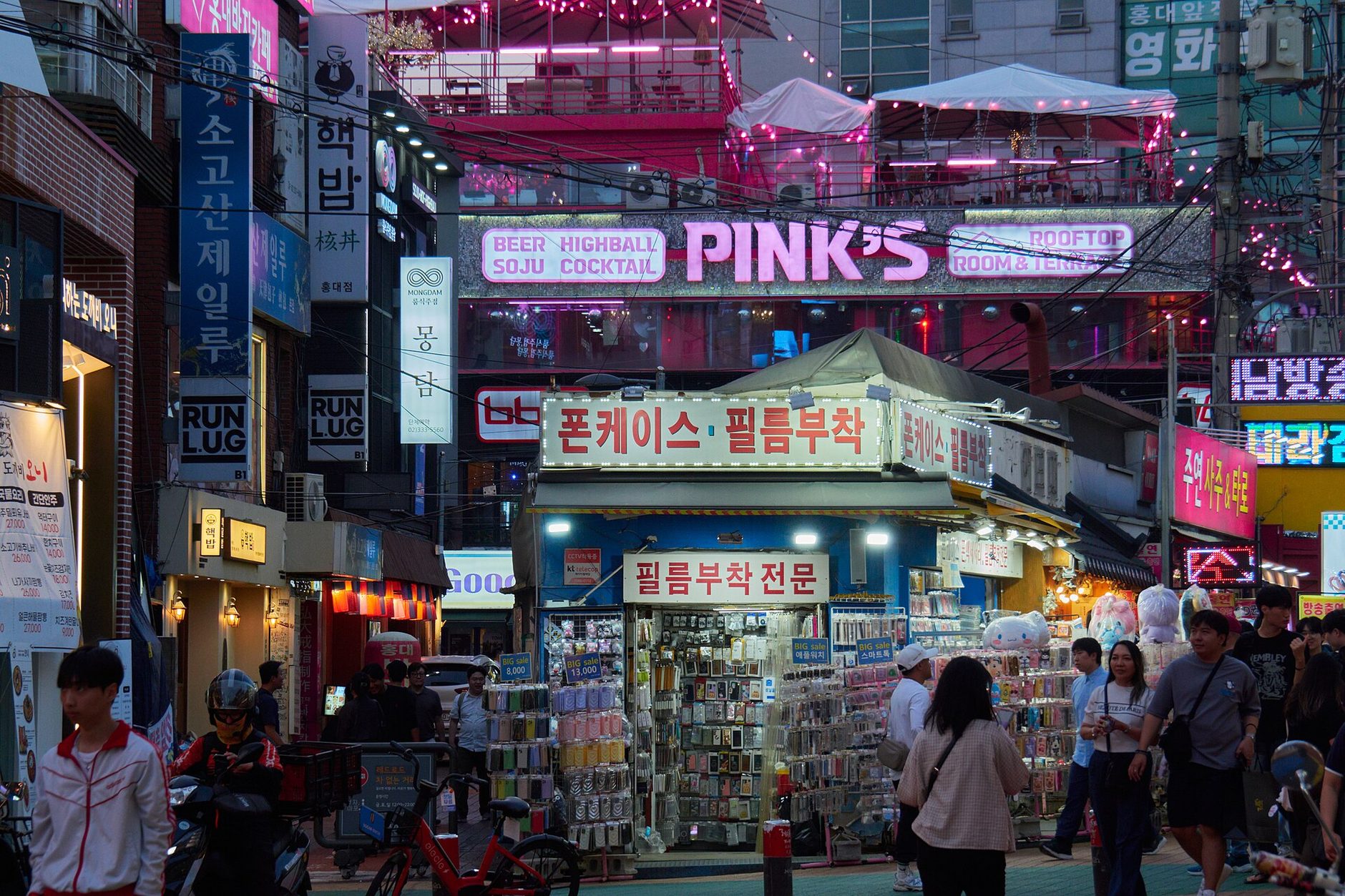
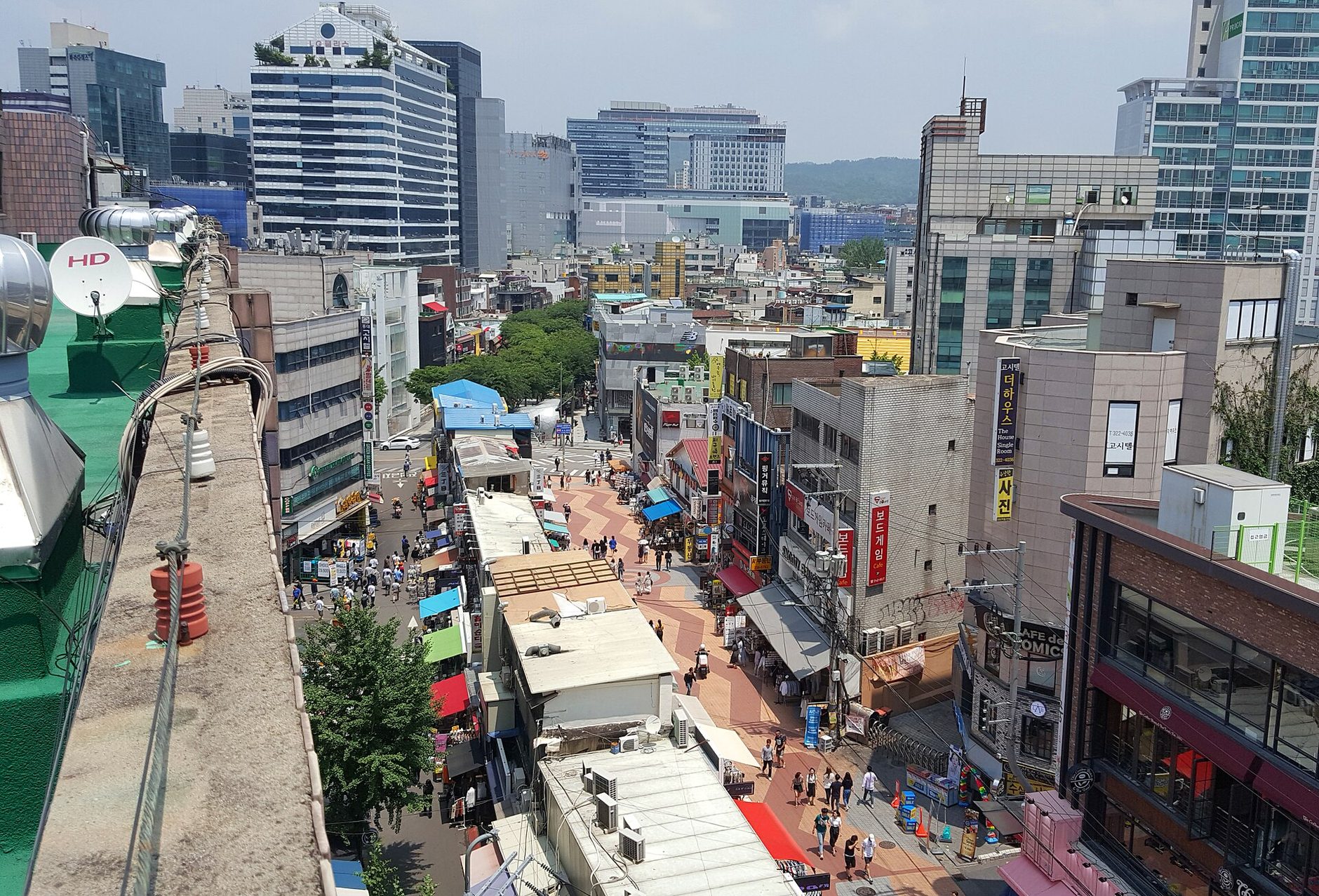
If you spend enough time in Seoul, you might hear locals joke about a very specific ailment. They call it Hongdae disease.
Years ago, to be diagnosed with Hongdae disease meant you had a terminal case of hipster superiority—canvas tote bag, wire-rimmed glasses, and a voice that somehow managed to say, “I liked them before you did.”
It sounds like an attitude. But it was also a defense mechanism. A way for the underground to draw a line between the people making things and the people just consuming a vibe.
In the 1990s, that underground had one huge advantage: space. The residential streets around Hongik University were lined with multi-family villas, and down below were damp, dark semi-basements called banjiha. Landlords struggled to rent them to families, so broke art students moved in. Those rooms weren’t pretty, but they were big enough to paint, weld, rehearse, and make noise without anyone asking what it was “for.”
Music followed the same logic. Small clubs and improvised venues could exist because the rent allowed them to. You’ll hear the punk story in the basements elsewhere—what matters here is what cheap space did to the map.
By the early 2000s, the secret was out. A coalition of venues created Club Day: one wristband, a dozen clubs, all night. It was a genuine celebration—and a massive, unprecedented success. It also pulled in a different crowd. Kids from across the river, salarymen, tourists. Hongdae stopped being a neighborhood you had to seek out and turned into the place you went.
As the crowds swelled, the money followed. A turning point came around 2010, when the airport railroad made Hongdae dramatically easier to reach from Incheon. And the mechanism of Korean real estate is simple and brutal: when foot traffic explodes, landlords demand astronomical premiums to renew leases. Corporate cosmetic chains and massive multi-story cafes moved in, paying rents that no punk venue or vintage shop could survive.
The ultimate symbol of that war between art and commerce was a tiny noodle shop called Duriban. In 2010, the couple running it was hit with an eviction notice to make way for redevelopment. When they refused to leave, the power was cut. So local indie musicians mobilized—breaking into the dark building, running cables to generators, and turning the shop into a concert space. For over five hundred days, bands played through freezing winters and humid summers inside a noodle shop, not because it was a good venue, but because it was a line in the street. They eventually won a settlement. But in the grand scheme, it felt like a last stand.
The original creators couldn’t afford to exist in the empire they helped build. So they started walking—south toward Sangsu, west into Mangwon, north to Yeonnam—tucking roasteries, studios, and tiny bars into quieter blocks. And the pattern repeated. The creators make a place feel alive, which makes it profitable, which makes it impossible for them to stay.
If you want to see the afterimage of what Hongdae used to be, find the Hongdae Playground, a small park near the university. Years ago, it hosted a weekly Free Market. Art students would sit in the dirt and sell hand-painted sneakers and homemade zines while acoustic acts played on the steps. Today, the park feels scrubbed down and repurposed—more waiting room than gathering place.
Hongdae still sells the idea of youth, rebellion, and underground art. Some of it survives, in basements and side streets. But a lot of the people who made the neighborhood magnetic have already learned the central symptom of Hongdae disease: as soon as something gets cool enough to be famous, it gets expensive enough to push its makers out.