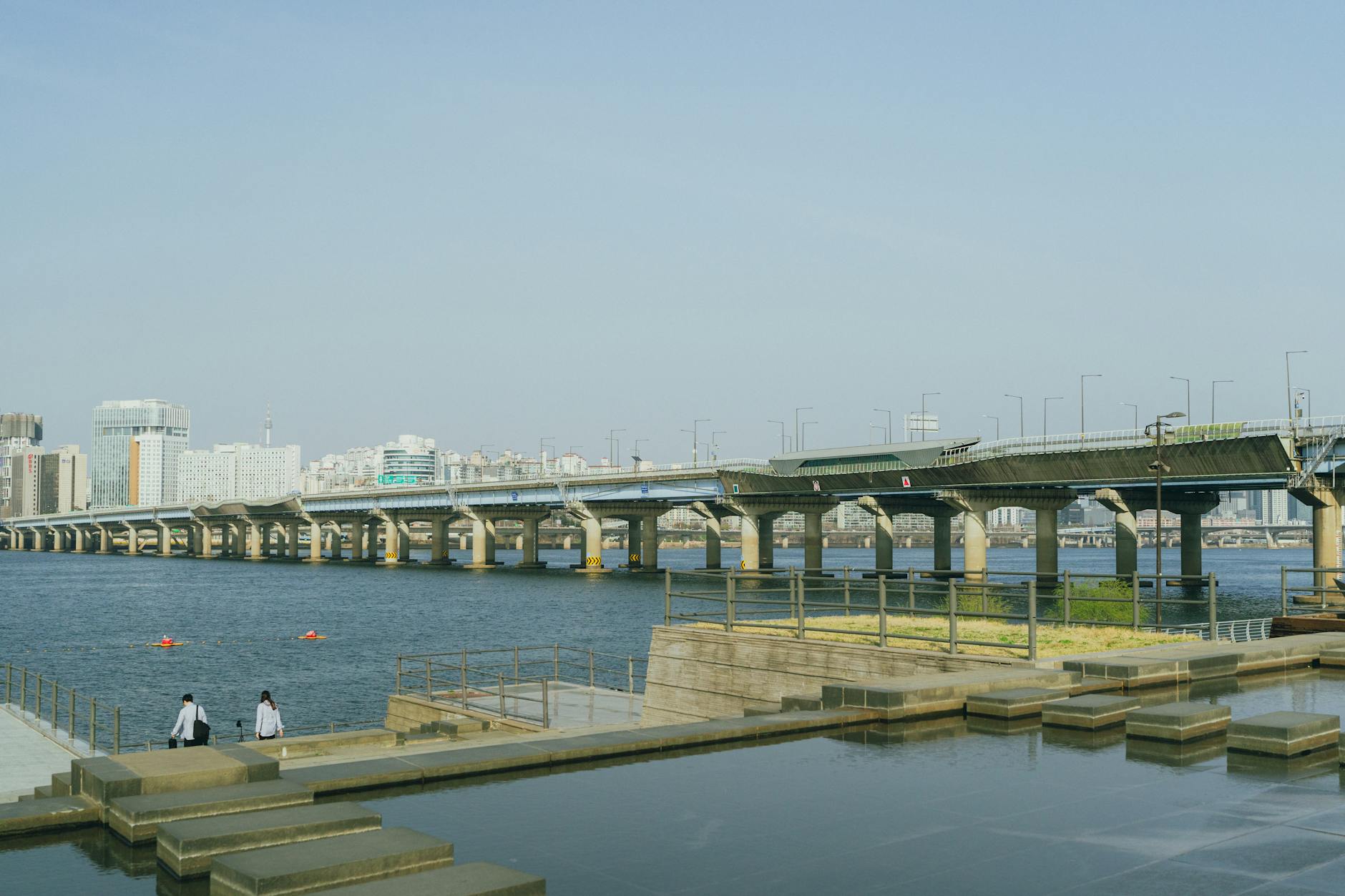
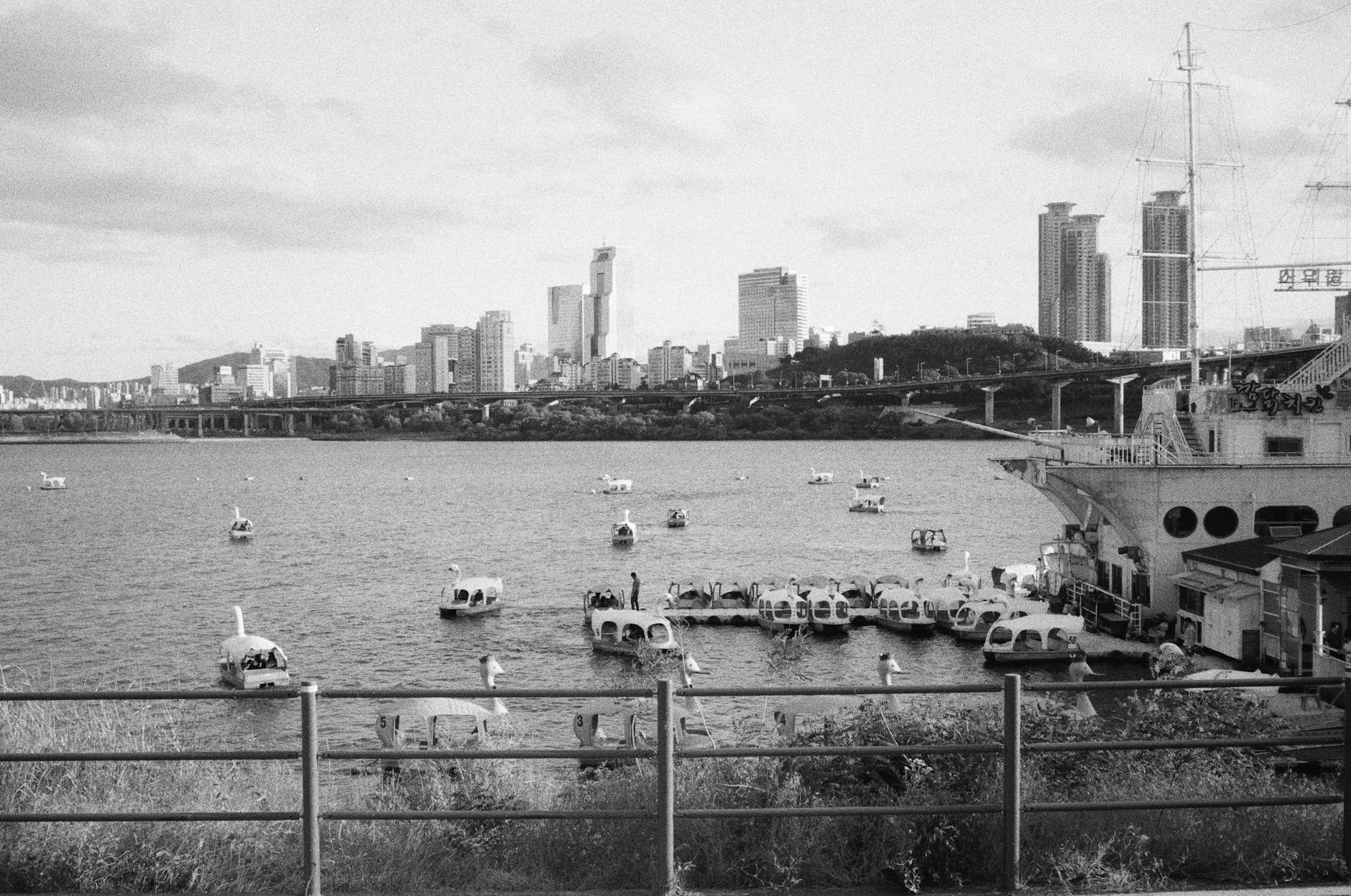
The Hangang (Han River) Parks are a 40-kilometer network of 11 public green spaces lining the massive waterway that bisects Seoul. Once a rigid concrete flood plain engineered for the 1988 Olympics, the banks have been softened over the last two decades into a continuous, breathable riverfront. Today, they serve as Seoul’s collective backyard—the place where apartment-dwellers come down to the water for tandem cycling, twilight picnics, and the highly specific ritual of eating convenience-store noodles from boiling foil bowls.
Until the mid-20th century, the Han River was bordered by wide sandy beaches where Seoulites swam and washed clothes. But as the monsoon season brought catastrophic floods and post-war industrialization accelerated, the river devolved into an open, toxic sewer lined with shantytowns.
When Seoul secured the 1988 Summer Olympics, the government scrambled to hide the pollution. They dredged the riverbed—sacrificing the natural beaches to make way for cruise ships—and locked the water behind steep concrete embankments and multi-lane expressways. The flat, sterile strips of land trapped between the roar of the highways and the flood walls became the first iteration of the Hangang Parks.
Decades later, the city realized it had severed itself from its own river. Starting in 2007, Seoul began tearing up the concrete, replacing rigid embankments with sloping soil and reeds to coax back fish and migratory birds. To get pedestrians past the barrier of the expressways, engineers bored dozens of foot tunnels—locally called "rabbit holes"—beneath the asphalt, linking dense apartment blocks directly to the water. In the most dramatic reversal, Nanjido, a 100-meter-high mountain of municipal garbage, was capped and seeded, transforming Seoul's primary landfill into a wetland park.