Know before you go
- Best time
- Morning or late afternoon Last reviewed · July 10, 2026
- Price
- Temple grounds are free; paid cultural programs are separate Checked at the source · July 10, 2026
- Time needed
- 45–90m Last reviewed · July 10, 2026
- Closures
- Temple access may vary around services, prayer, and event schedules Checked at the source · July 10, 2026
- Crowds
- Prayer/event times change the feel Last reviewed · July 10, 2026
Trip starting point
A look around

The story
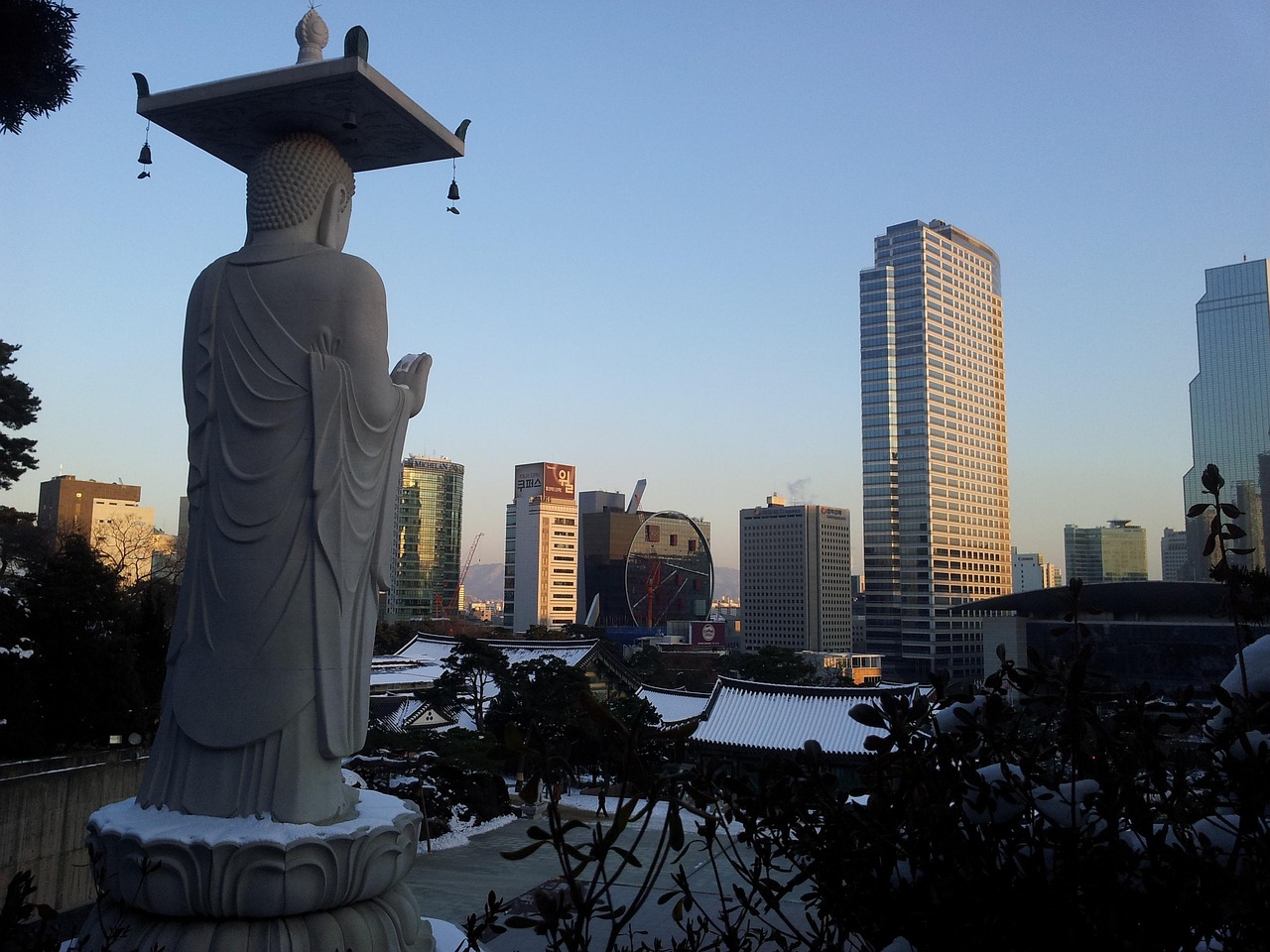
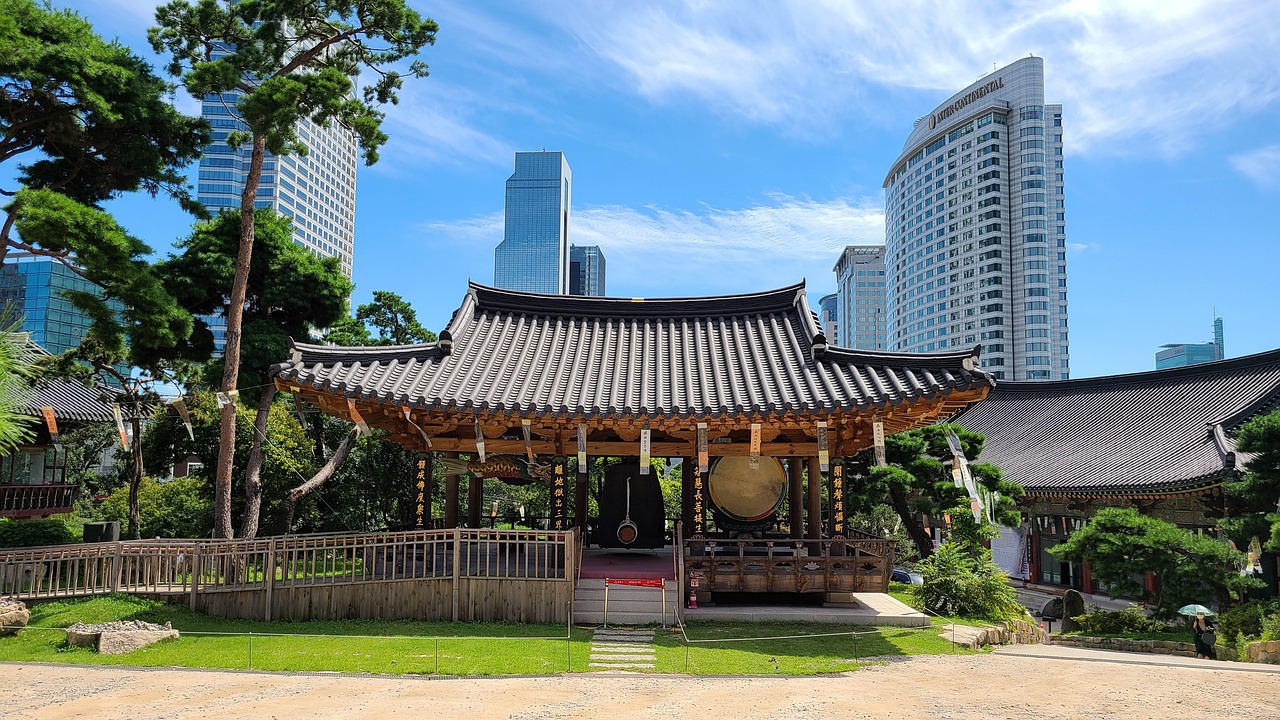
Bongeunsa is a 1,200-year-old Buddhist temple standing directly across the street from the COEX underground mall in Gangnam, Seoul's wealthiest commercial district. Originally built when the southern bank of the Han River was remote and forested, the temple grounds are now hemmed in by glass high-rises. It remains an active monastic center and the headquarters for the Seon (Zen) sect—a place where the rhythmic chanting of monks blends with the hum of traffic, and visitors cross dirt courtyards alongside office workers on their lunch breaks.
Founded in 794 CE, the temple thrived for centuries until the Joseon state adopted strict Neo-Confucianism. The new government systematically dismantled Buddhism: seizing temple lands, forcing monks into the lowest social caste, and banishing them from the capital.
The religion survived in Seoul largely through the defiance of royal women. In 1498, Queen Jeonghyeon relocated the temple slightly to its current footprint to pray for her late husband. Half a century later, Queen Munjeong engineered a brief, powerful revival, making Bongeunsa the national headquarters for the Seon sect. The monks trained here under her protection would later lead guerilla militias to defend Korea during the 1592 Japanese invasions. When the Queen died, Confucian scholars swiftly exiled and assassinated her head monk, but the Seon tradition had already taken root.
Bongeunsa’s physical structures fared worse. Damaged by invasions, gutted by an accidental fire in 1939, and leveled by artillery during the Korean War, nearly every historic beam and tile was lost. The sprawling complex you walk through today was meticulously rebuilt in the 1960s and 70s—its timber halls rising precisely as the surrounding farmland was being paved into the concrete grid of modern Gangnam.
Find a Seoul guide for this stopBrowse the routes and choose the one that fits your trip. ›